The four components and their mechanisms
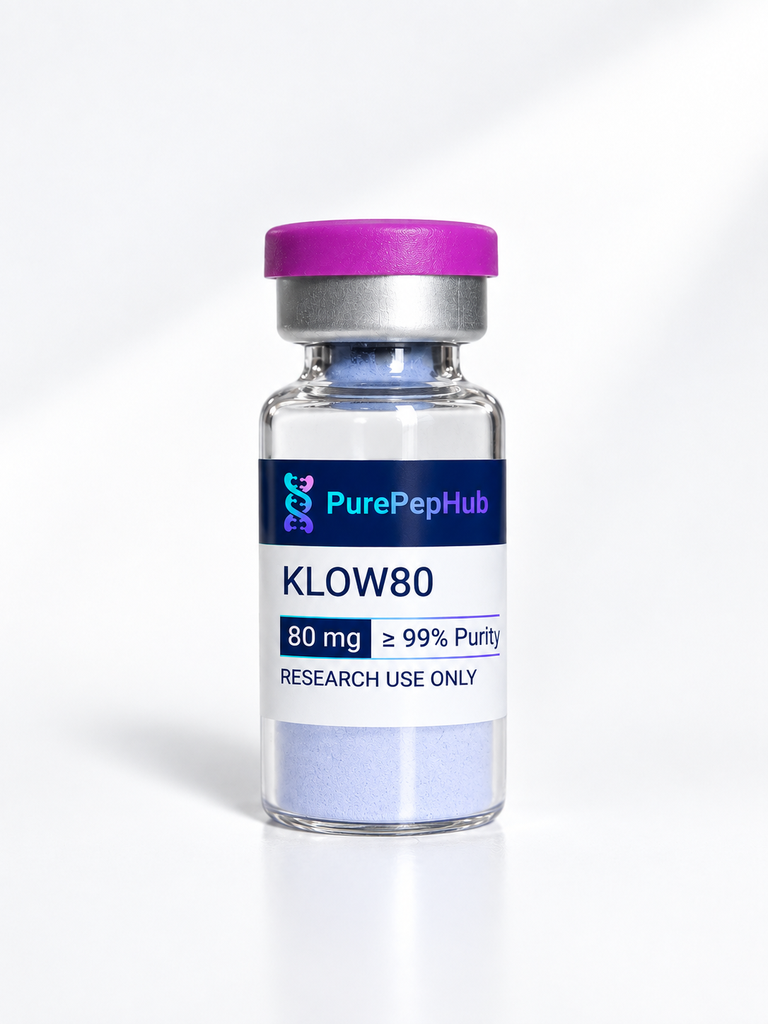
Each of the four peptides in KLOW80 has been studied individually in the literature for a different aspect of tissue recovery. Below is the role of each component as described in available studies.
GHK-Cu — collagen and matrix
GHK-Cu is a natural copper tripeptide that in the literature is associated with increased collagen, elastin and glycosaminoglycans, as well as with extracellular matrix remodeling. It delivers copper in a biologically available form — a cofactor for collagen crosslinking — and is studied for antioxidant and anti‑inflammatory effects, including modulation of gene expression toward a more „youthful“ profile.
KPV — anti-inflammatory axis
KPV is the C-terminal tripeptide of α-MSH. It is mainly studied for suppression of pro‑inflammatory signaling via the NF-κB pathway, without activating melanocortin receptors (i.e., without effects on pigmentation or appetite). This component distinguishes KLOW80 from standard GLOW blends — it adds an independent anti‑inflammatory axis to the regenerative complex.
BPC-157 — angiogenesis and tissue regeneration
BPC-157 is a synthetic pentadecapeptide, derived from a partial sequence of a gastric protein. In preclinical models it is associated with pro‑angiogenic activity (upregulation of VEGFR2 and the Akt-eNOS axis), fibroblast migration, collagen synthesis and recovery of tendons, muscles, bones and the gastrointestinal tract.
TB-500 — cellular migration
TB-500 is a synthetic analogue of the active region of Thymosin β-4. It binds G-actin and maintains a reserve for rapid cytoskeletal reorganization, driving cellular migration. Preclinical data also link it to VEGF-mediated angiogenesis and recruitment of stem/progenitor cells to